

Rachel Panckhurst, enseignante-chercheuse en linguistique-informatique à l'université Paul-Valéry Montpellier III explique ce que le SMS a changé dans nos vies et bat en brèche des idées reçues : ce n'est pas un appauvrissement mais un enrichissement du français, dit cette spécialiste. Militant pour son usage pédagogique en classe, elle donnera une conférence ce jeudi à Paul-Valéry Montpellier III.
Here I only provide a list of books and articles about specific Breton dialects. There is also a number of articles, published in the review Hor Yezh and that deal with specific dialects: I have not listed all of them here, since they have already been listed in the website of that review (click on the book to download the list of the articles, in Excel format).
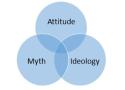
Language attitudes, ideologies and myths, by Emma Humphries, University of Nottingham.
La Bretagne linguistique est une édition du CRBC. Ses numéros depuis 2016 sont consultables en ligne sur OpenEdition.
Open access (OA) is becoming increasingly important for research in the UK and worldwide. This page provides some guidance on OA that is specifically tailored to linguists within the UK.

BAAL is a professional association, based in the UK, which provides a forum for people interested in language and applied linguistics. We have an international professional membership of around 1000 members.
This COST Action focuses on the dynamics involved in becoming a “new speaker” of a language in the context of a multilingual Europe.
This is the list of recommended readings of /r/linguistics. The list is far from being complete, but it should be enought to get a glimpse of some of the basic readings in each subfield. A list of academic journals related to linguistics and its subfields is also available. All references are organized alphabetically.
Much of the debate between Cornish linguists centers on prosody (i.e. those features of pronunciation which are normally not explicitly noted in writing, like stress, intonation, length, breaks and so on – one could sum it up as the rhythm and melody of a language). A central concept in this respect is the so-called Prosodic Shift which Nicholas Williams postulated for early Middle Cornish: he claims that before the earliest Middle Cornish texts were written, Cornish exchanged its inherited Celtic rhythm for an English one. Ken George disputes this; in his earlier works he claimed that this change did take place, but not before ca. 1600. He has recently adapted his theory and now claims that it did not happen at all, and that the rhythm and melody heard in traditional Cornish English pronunciation of Cornish place-name does not represent how Late Cornish sounded. What this new twist to his theory does not explain well is why, from 1600 on, so many vowels which had been (half-)long originally are marked as short in the texts. Such massive change in spelling at least raises the suspicion that the original rhythm of the language did in fact change.